





















After eight hours of screen time, the muscles around your eyes are working harder than you realise. Accommodation — the process of focusing at close range — places sustained demand on the ciliary muscles and can trigger a cascade of discomfort that many people mistake for generic fatigue.
Digital eye strain, sometimes called computer vision syndrome, typically presents as dryness, blurred vision, headaches, and a heavy sensation behind the eyes. The underlying issue is often evaporative dry eye: when we concentrate on screens, blink rate drops by up to 66%, reducing tear film stability.
Precision warmth in the 38–42°C range has been shown in clinical settings to support meibomian gland function — the tiny oil glands along the eyelid margin that keep tears from evaporating too quickly. Combined with gentle orbital pressure, a 15-minute session can help the visual system shift from sustained focus into recovery mode.
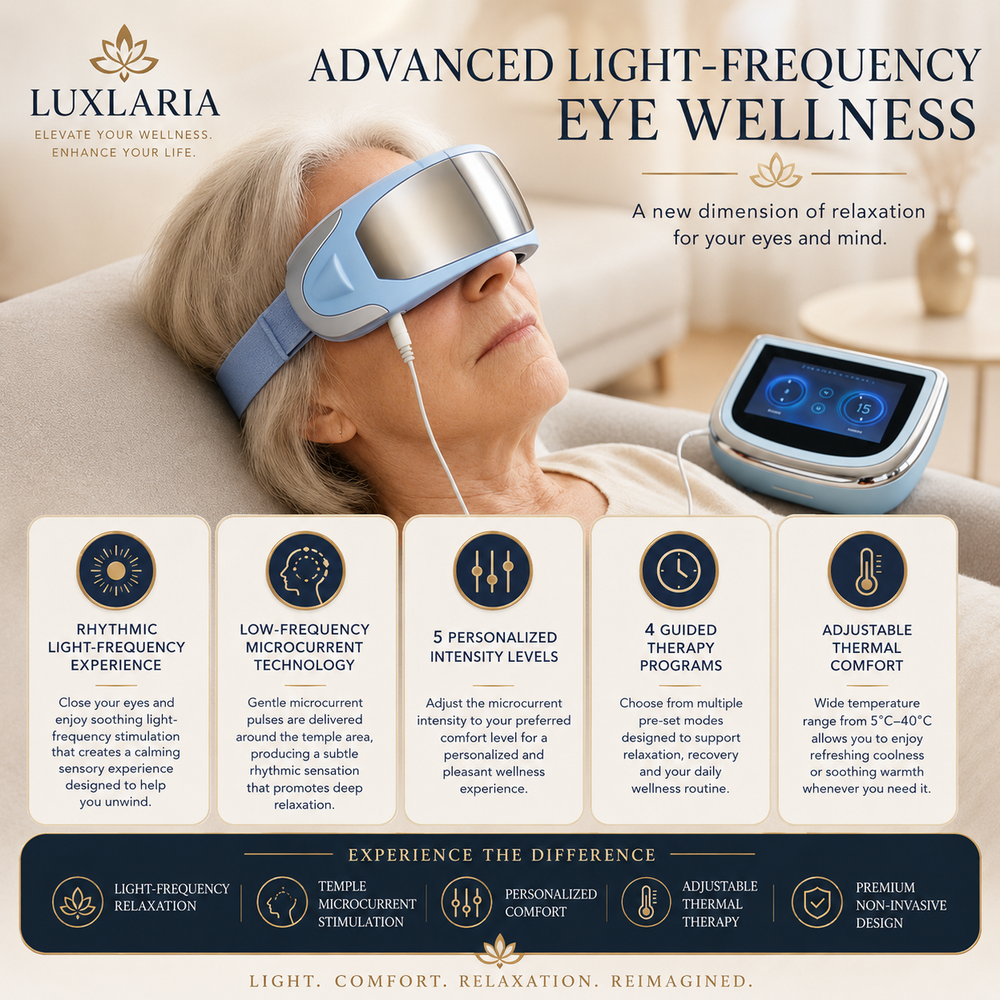
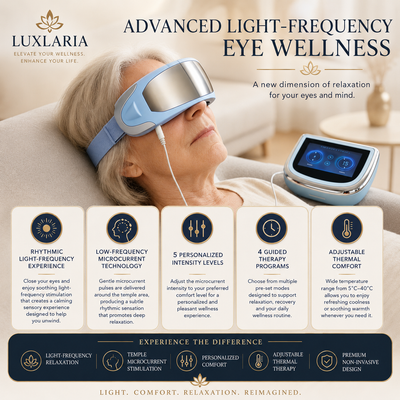
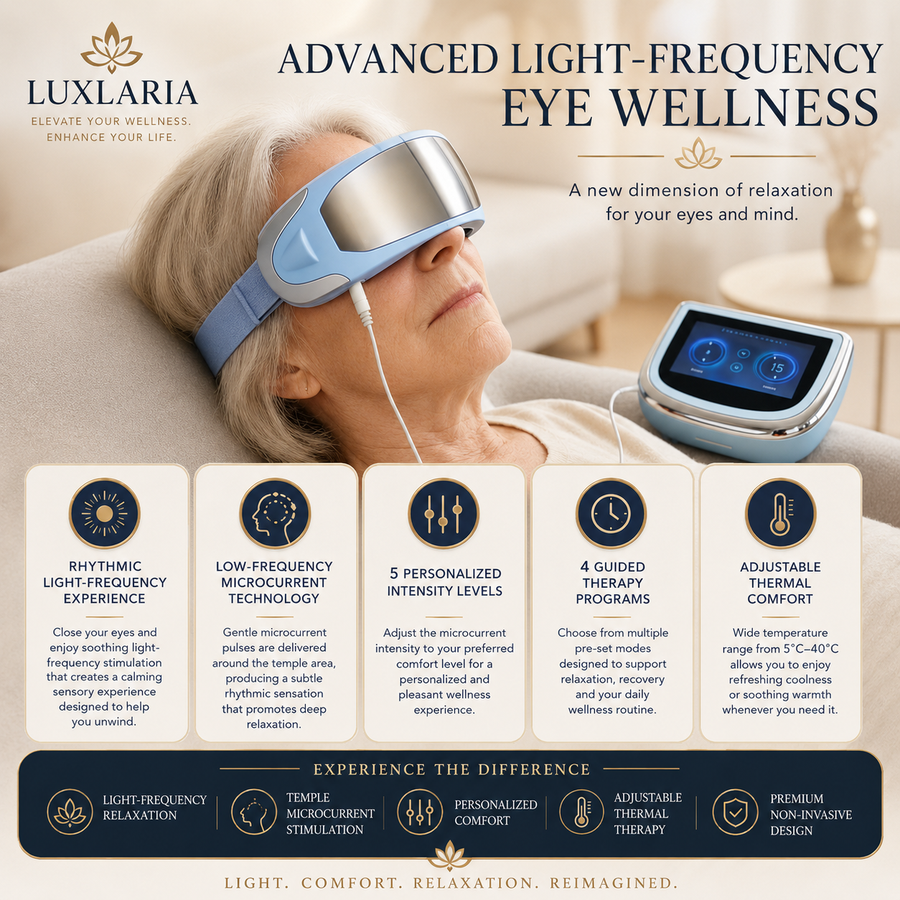
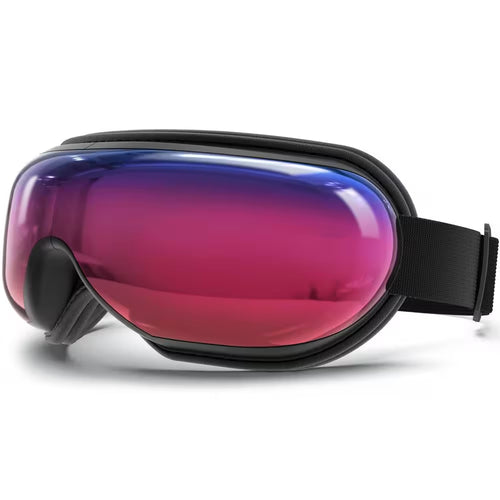
At Luxlaria, we designed the Smart Eye Therapy System Pro around these mechanisms — not marketing claims. Every temperature setting, pressure zone, and session length maps to published clinical guidance on periorbital recovery.
Key takeaway: Screen strain is a physiological response, not a character flaw. Treating it with deliberate recovery — not just rest — is how high performers protect their vision long-term.


